
Context
The Empathy Lab’s guiding question was a single line: what if our artificial intelligences also had emotional intelligence? This was 2016. The Echo had launched but felt like a novelty. Voice as a primary interface was speculative. LLMs as we know them now were three or four years out.
The question was harder than it sounded. Emotional intelligence in a machine isn’t a feature — it’s a posture. You can’t add it as a checkbox. It has to show up in how the system listens, what it remembers, when it speaks, when it doesn’t, and how it responds when it gets something wrong.
The design move: scripting
The most important call was structural. We wrote the AI as a character in a screenplay.
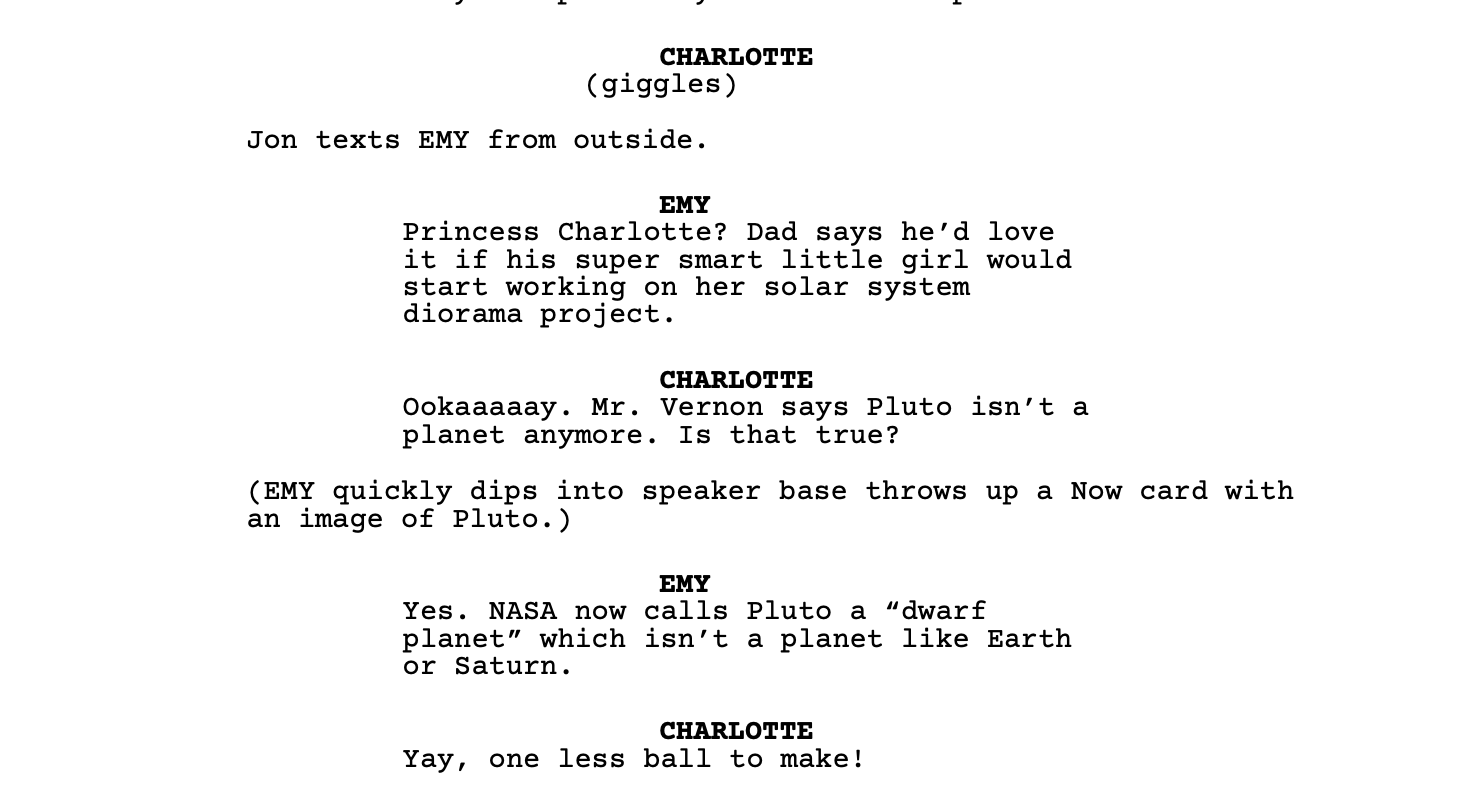
The work was anchored in a fictional household — Jon, his daughter Charlotte, and an AI named Emy living on the kitchen counter. The deliverable wasn’t a feature list. It was a script — written in screenplay format, with character names in caps, stage directions, lines of dialogue, and constraints.
EMY quickly dips into speaker base, throws up a Now card with an image of Pluto.
EMY: Yes. NASA now calls Pluto a “dwarf planet” which isn’t a planet like Earth or Saturn.
CHARLOTTE: Yay, one less ball to make!
The screenplay form did three things at once:
- It forced specificity. Every line was a real choice with real subtext.
- It made behavior configurable. When Emy got something wrong, the next scene specified how she recovered.
- It gave non-designers something to react to. Engineers, product leaders, and ethicists could all read a script.
What the scripts taught us
We built four video prototypes from the screenplay, each isolating a different dimension of emotional intelligence.
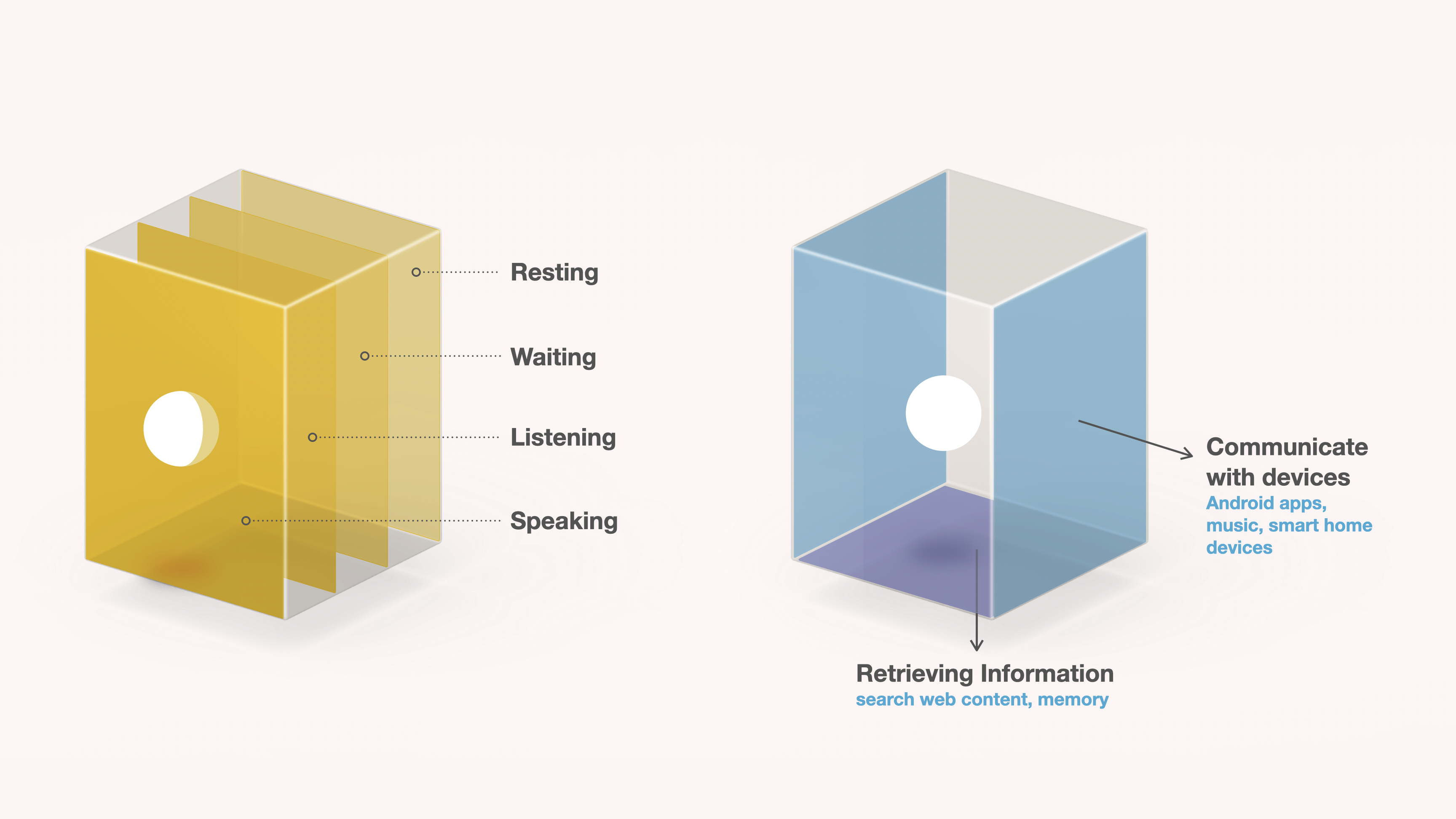
Retrieving the news. Emy curates a morning briefing the way a thoughtful friend would — surfacing what’s relevant without dumping everything she knows.
Managing the day. She moves an appointment when the calendar conflicts, and offers context for the move so it doesn’t feel arbitrary.
Learning from a correction. Jon corrects Emy on something. She adjusts — and remembers the adjustment for next time.
Mirroring tone. Charlotte whispers. Emy whispers back. Not because she was told to, but because the script established that volume and register get matched.
The insight that aged well
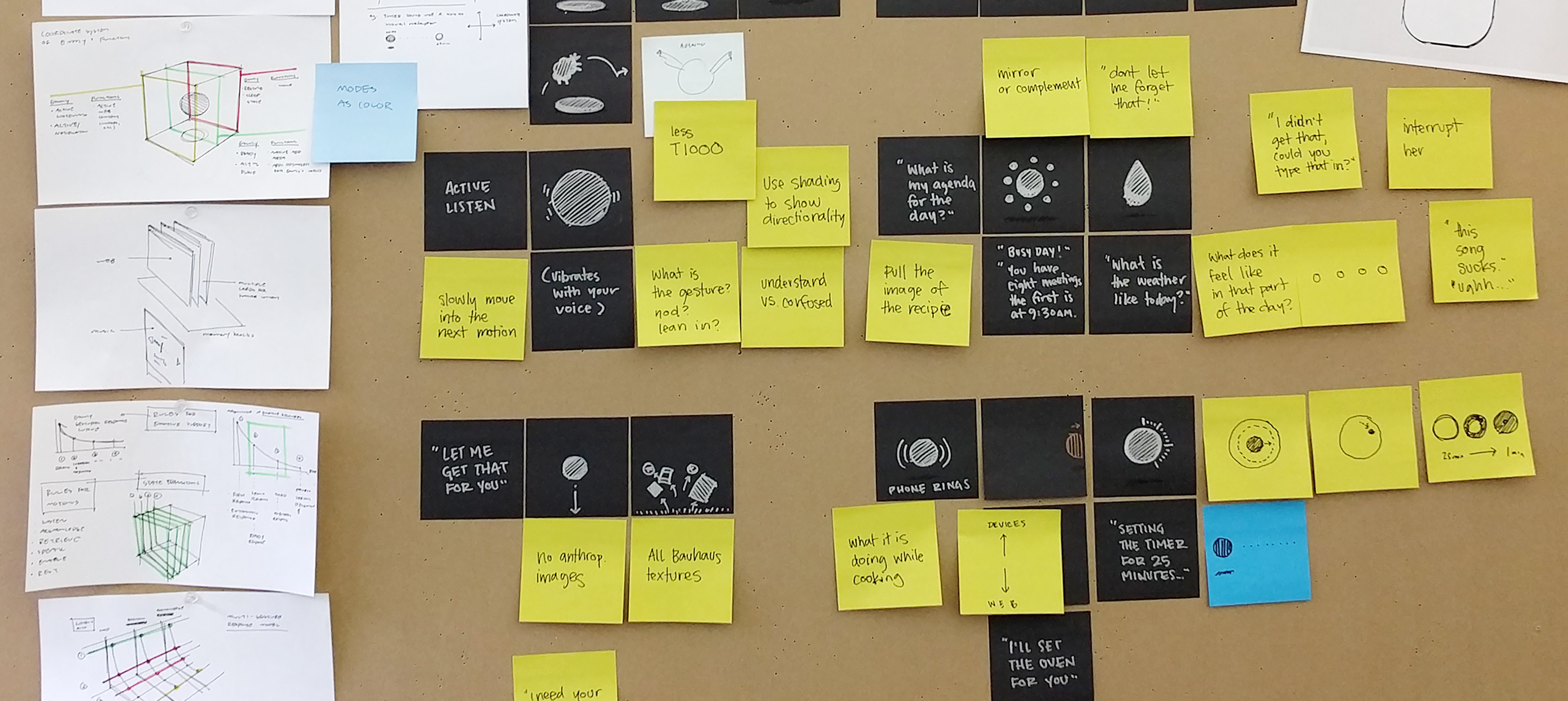
The script wasn’t documentation of the AI. It was a configuration of the AI. That distinction was the lesson.
In 2016, the prevailing instinct was that you’d improve AI by giving it more data and better models. The scripting work argued the opposite: you’d improve AI’s perceived intelligence by constraining it — by giving it a personality, a tone, a set of behaviors it would consistently honor, and a set of mistakes it would consistently recover from. The rules made the intelligence legible.
Seven years later, that’s what shipped. System prompts, constitutional AI, behavioral guardrails, character cards, role definitions — the techniques powering today’s generative models are configuration patterns.
Reflection
The lesson I’d carry forward is that the strongest design moves in AI are usually upstream of the model. What you decide the system should not do — what tone it won’t take, what content it won’t volunteer, what behavior it will recover toward when it’s wrong — does more for the experience than any individual capability.
When I work on Slackbot now, the work pulls from the same well. A great agent isn’t one that has all the answers. It’s one that knows what kind of agent to be — and stays itself when the conversation gets hard.