Context
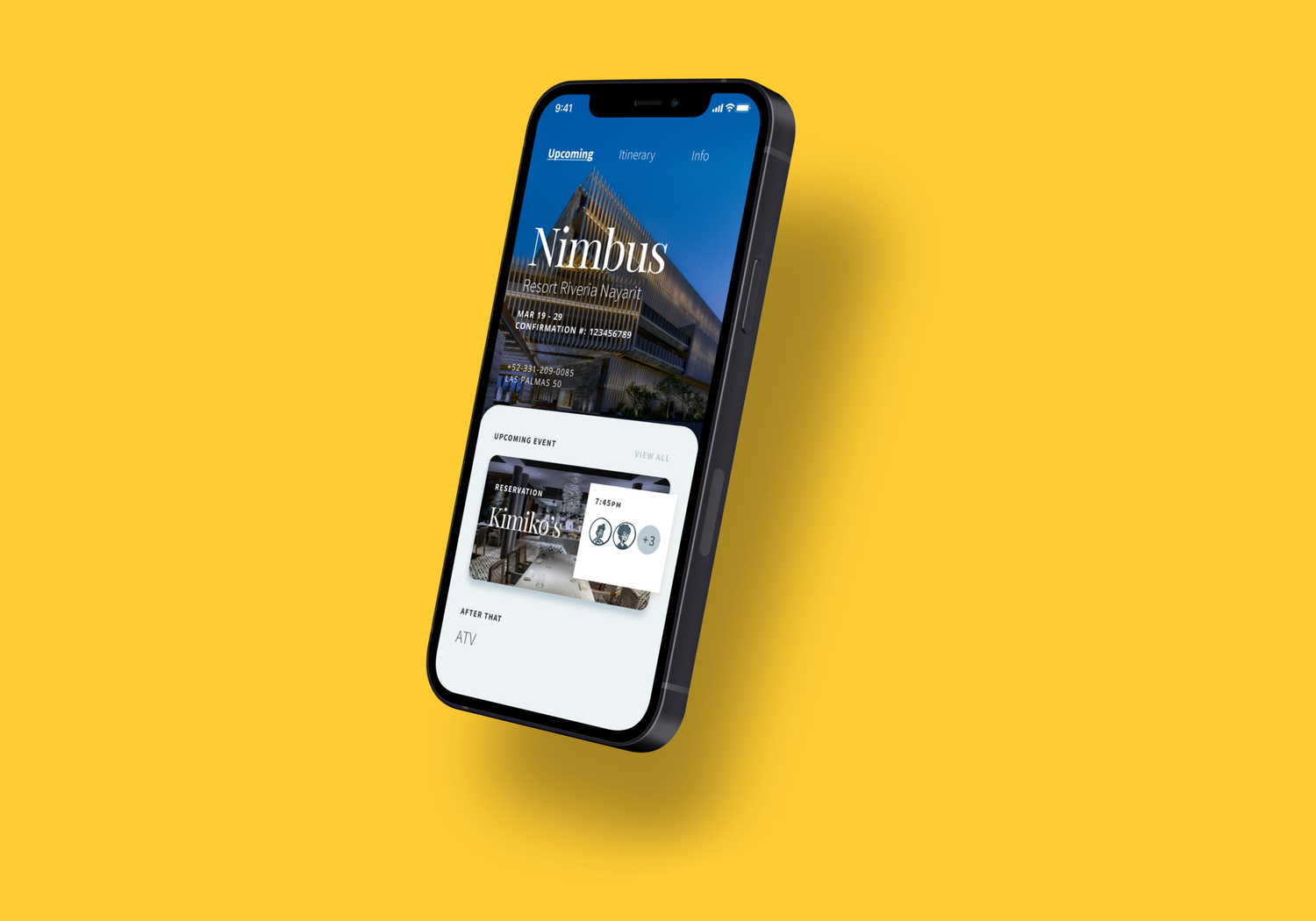
Marriott wanted to rework the all-inclusive category for younger travelers. The strategic problem was that “all-inclusive” still meant a Sandals brochure from the ’90s for most of that audience. The market was real, but the category needed a different shape.

What we were really trying to do
A luxury all-inclusive resort runs on inventory that depreciates by the hour. Rooms go unsold, restaurant tables stay empty, spa slots and excursion seats expire unused. Most resorts manage that decay crudely — last-minute discounting, opaque availability — which leaves money on the table and disappoints guests who didn’t know the option existed.
The brief asked us to design a guest experience that closed that gap on both sides: give guests more of what they actually want, and give the resort a way to monetize what would otherwise expire.
Field research
We did workshops at Marriott’s headquarters first, then went to Cabo to interview guests and staff at properties on the ground. Two patterns showed up consistently:
- Guests didn’t know what was available. They paid for things they didn’t realize were already included. They missed things they would have loved.
- Staff knew the property far better than the app. The tipping interaction in particular — moving cash from the guest to the housekeeper, the bartender, the bellhop — was where the digital layer felt most clearly absent.

The structural move: a connected guest profile
The most important call wasn’t a feature, it was an architecture decision. To deliver a journey that adapted to each traveler — preferences, pace, family context, special occasions, on-property choices — we needed a unified view of the guest that traveled with them across every touchpoint. We called it the connected guest profile.
The profile assembled from three sources: explicit preference capture before the trip, behavioral signal from in-app recommendations and bookings, and on-property notes from staff who knew the guest by name. Every other piece of the journey — itinerary suggestions, room readiness, the offers we’ll get to next, even the cocktail the bartender had ready before the guest sat down — read from that profile rather than re-asking the guest. The profile was the substrate. Everything else was an expression of it.
The key value driver: the Golden Ticket
With the profile in place, the most visible payoff was a revenue-management lever that didn’t feel like a hard sell to the guest.
We called it the Golden Ticket: a time-bound, personalized offer surfaced in the guest’s app — a private cabana for the next two hours, a wine tasting with the sommelier at 6, the last spa slot of the afternoon. The price scaled with how close the inventory was to expiring. Cheap if the slot would otherwise go unsold; premium if it was genuinely scarce. Because the offer was personalized to the profile, what surfaced was something the guest had actually told us (or shown us) they wanted.
The framing flipped the dynamic from marketing notification to concierge whisper, which is the difference between an experience guests resent and one they brag about. The offer wasn’t an ad; it was a gift with a price — surfaced as something the guest had earned access to, not something the resort was trying to push.


The journey
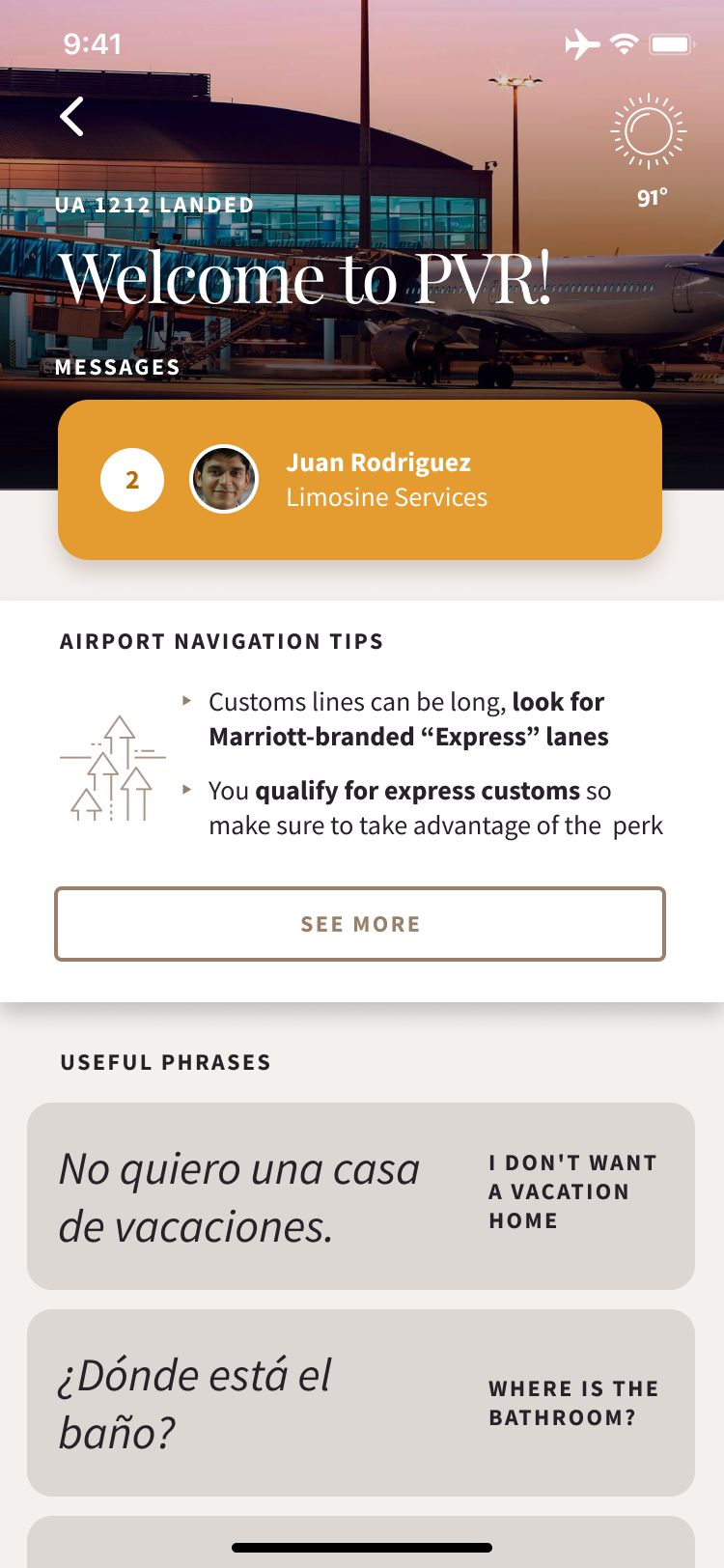
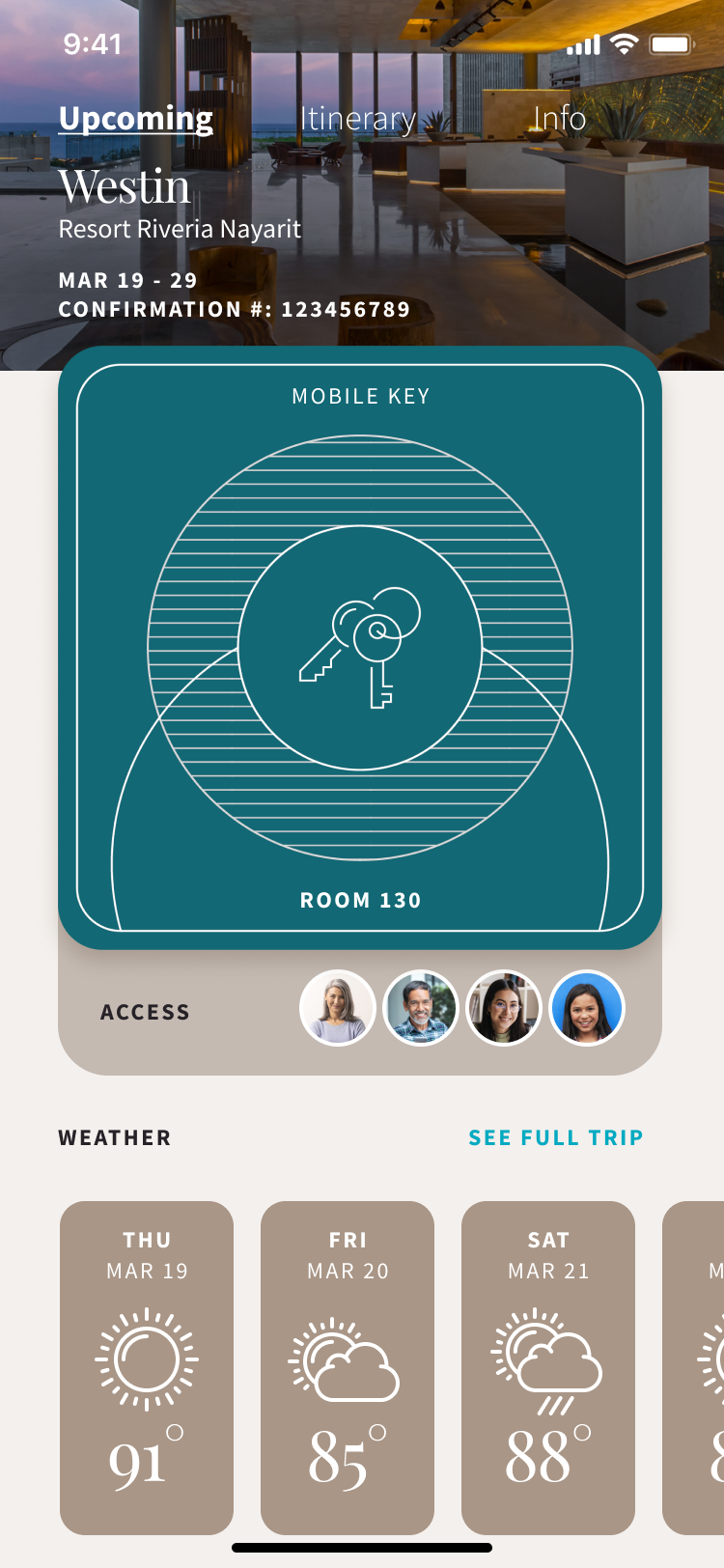
The recommendations stitched together as one connected journey: pre-trip, arrival, on-property, post-stay. Each touchpoint had a specific mechanism — preference capture before the trip, a mobile key replacing the front-desk handoff, in-app tipping closing the loop on the most-cited service-app gap.


What COVID taught me
A month before pilot, the world changed. Hospitality stopped overnight. Our client contacts were furloughed. The roadmap that had been the company’s center of gravity became a roadmap for a future that wasn’t going to arrive on the original timeline.
The work didn’t ship. It’s tempting, in a portfolio, to leave shelved projects out of the story — but the right ones are worth telling honestly.
What I do know: the structural bet — a unified profile that read from explicit preferences and on-property behavior, used to drive itineraries and offers from a single source of truth — was a hypothesis that needed real guests to validate. Without the pilot, what’s left is a strong-feeling proposal and an instinct that it would have worked. That instinct is mine. I can’t ask you to take it on faith.
The harder lesson is upstream of the design. Most projects that fail don’t fail because the design is wrong; they fail because the surrounding context shifts in a way the design wasn’t built to absorb. The question I’d ask earlier next time: what would it take for this not to matter? If the answer is short, the work is brittle.
Reflection
If I were briefed on this tomorrow, I’d run it differently — and the honest reason isn’t COVID. It’s that I let the journey design out-run the infrastructure question, and the value driver out-run the proof that guests would read it the way we hoped.
I’d test the Golden Ticket framing in a small pre-pilot — even a single property running live offers for a quarter — before committing the rest of the journey to it. The whole design rides on guests perceiving the offer as a gesture rather than a notification, and that perception is empirical, not theoretical.
I’d also push harder on the resort-side revenue-management lever before designing the guest-side experience. The guest journey assumes the resort can characterize its perishable inventory in real time. We had a narrative for that; we didn’t have proof. A briefing today would lead with the infrastructure question — can the resort actually tell you what’s about to expire? — and let the journey design follow from the answer.
The Golden Ticket might still be the right answer. I’d want to know that before designing the journey around it.