Context
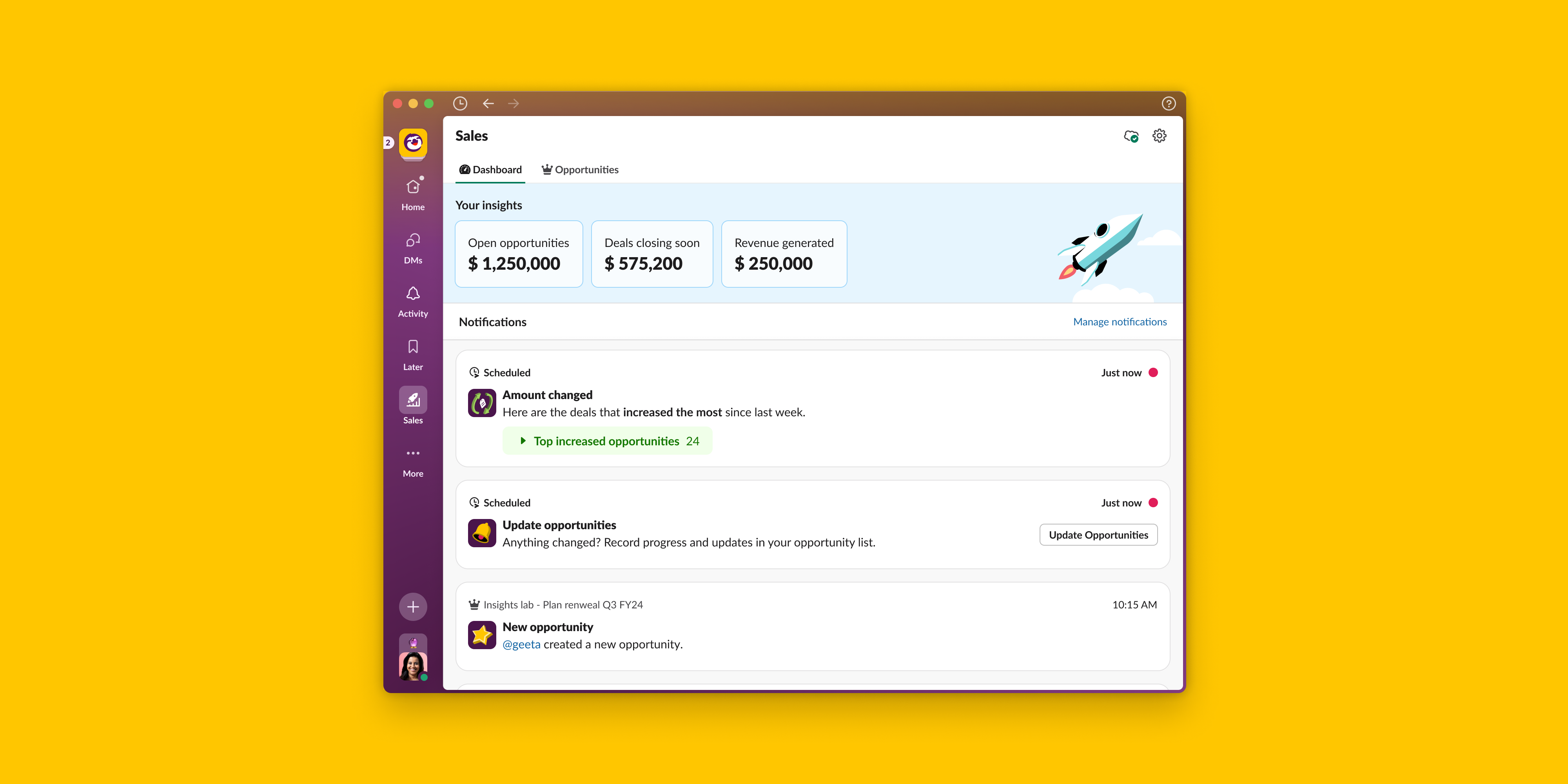
The market data was stark: only 5% of Sales Cloud customers were on Slack. The two products had been treated as adjacent tools; they needed to feel like one. Outside the developer base, Slack still read as a chat app — not a place where sales actually happened.
The first swing — and what it taught us
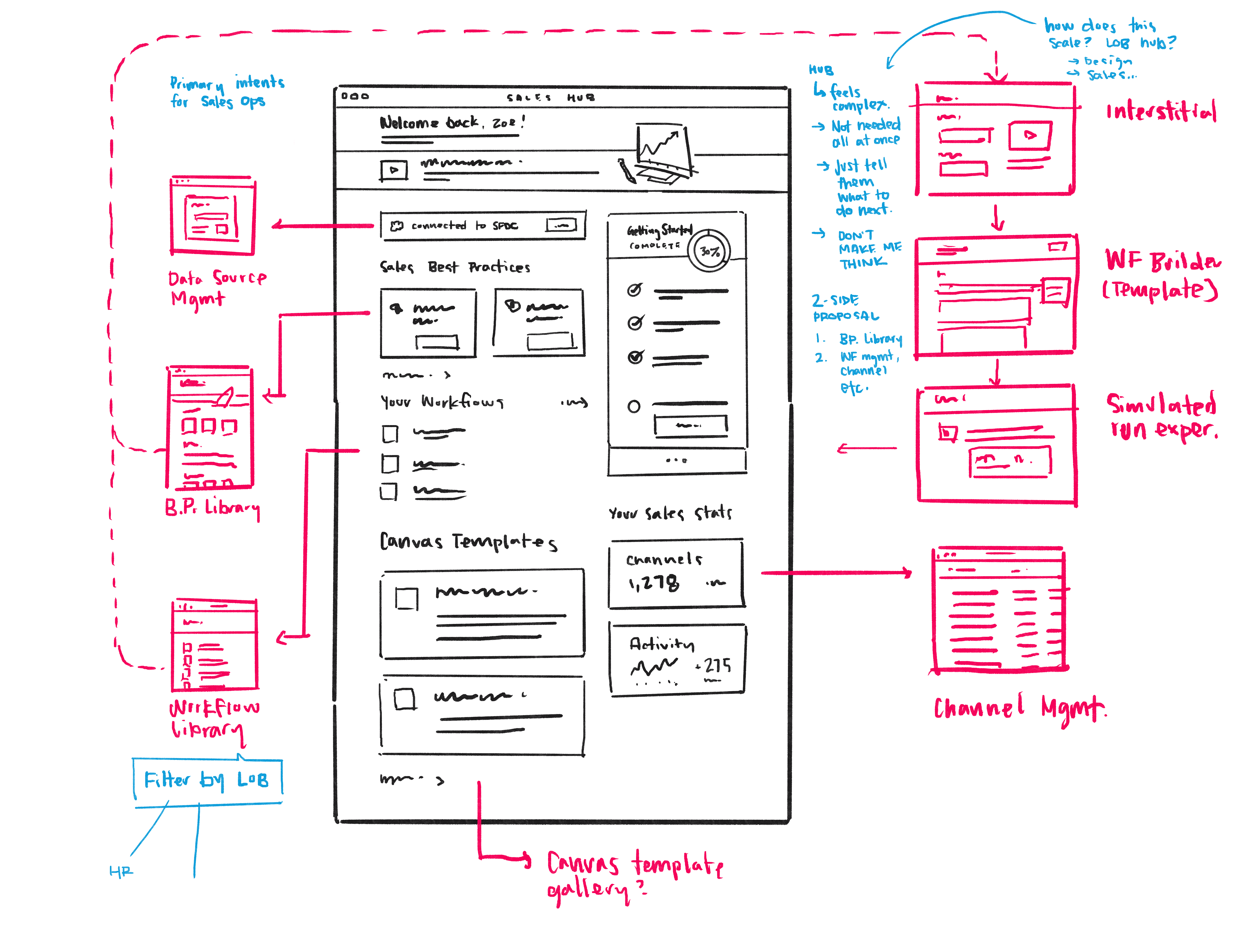
Our first attempt was a “best practices library”: a guided onboarding surface that would teach sellers how to set up Slack effectively — deal channels, key sales-app connections, account information habits. The instinct was that the gap between Slack and Sales Cloud was a knowledge problem.
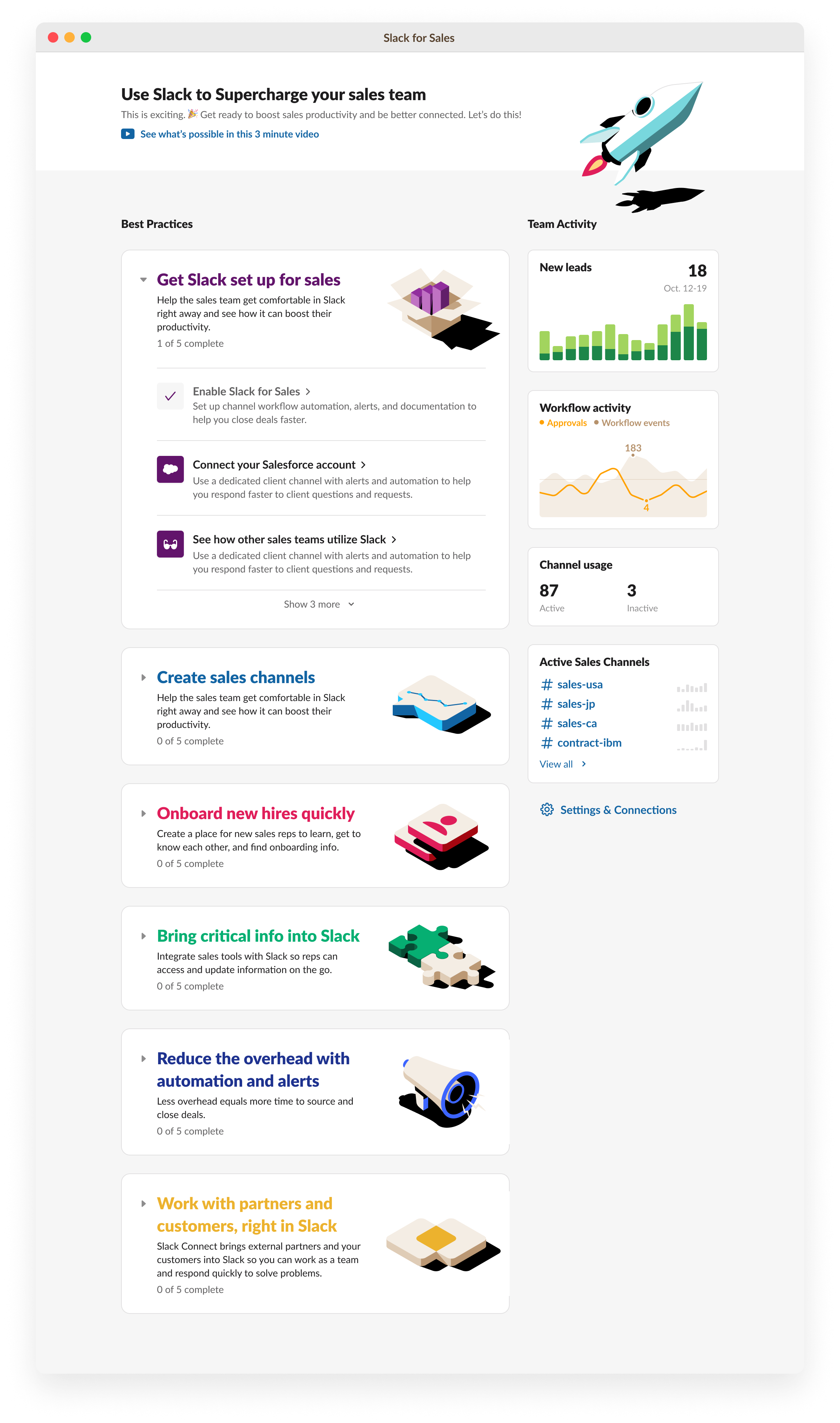
The work was clean and well-designed. It also missed. Leadership feedback was direct: it read as instructional content, not as a product. We were teaching sellers about Slack instead of changing what Slack did for them.
A different question to start with
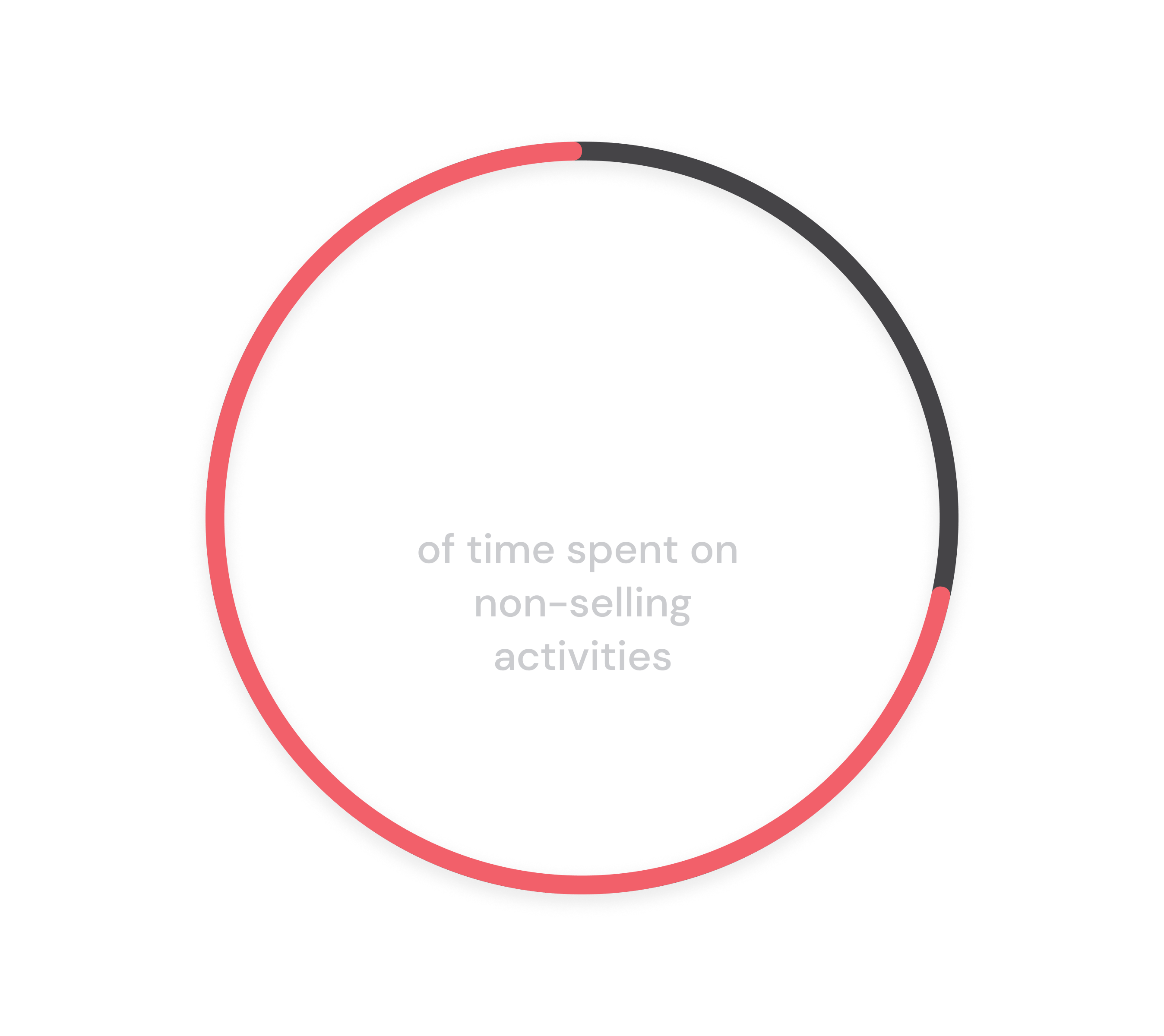
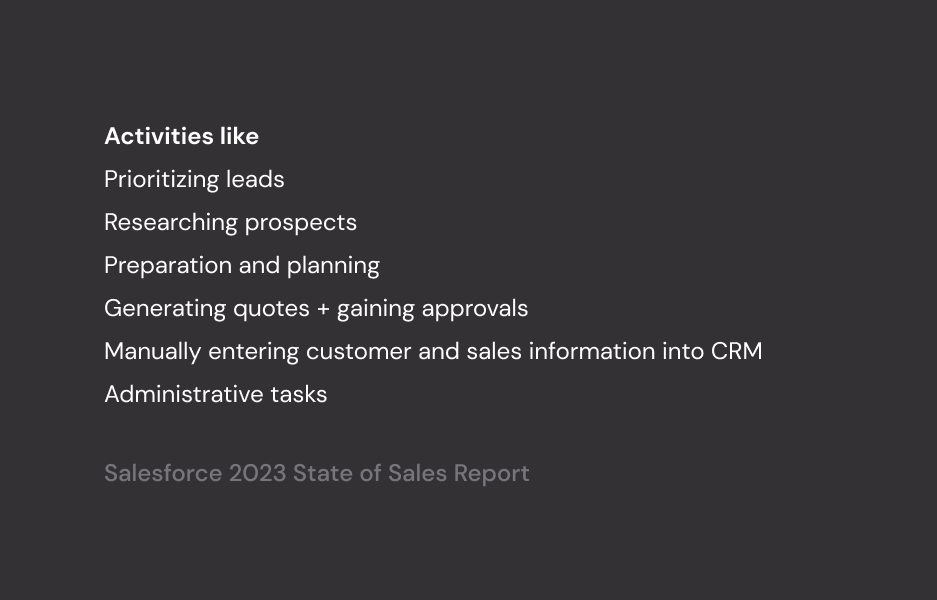
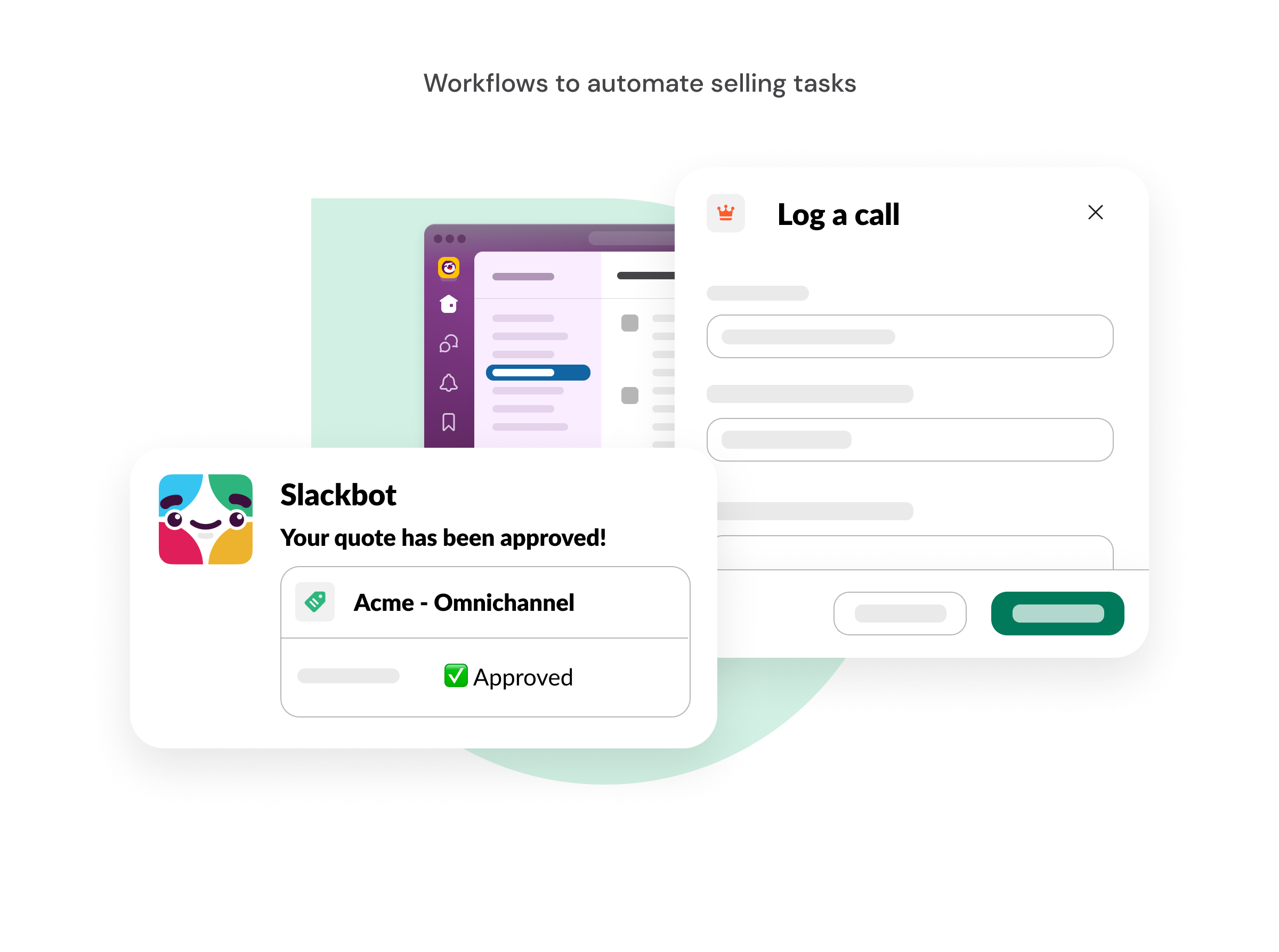
Salesforce’s State of Sales report had a number we kept circling: reps spend 72% of their time on non-selling work — prioritizing leads, prepping calls, generating quotes, entering data. The instinctive response (make the CRM faster) was the wrong one. The work that frustrates reps is the work between the CRM and where they actually live: email, Slack, and meetings.
So we asked a different question: what if we could give that 72% back to the seller?
Why we sketched
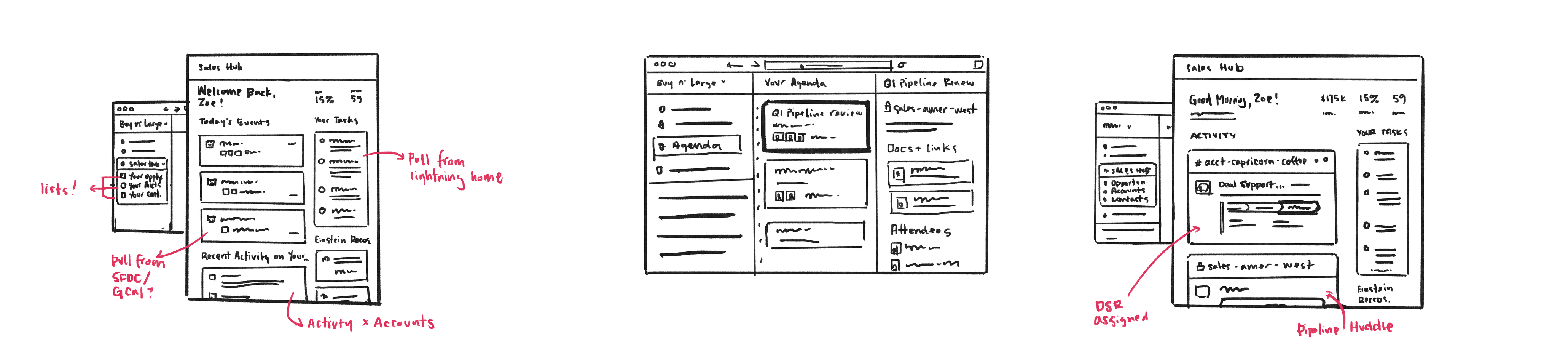
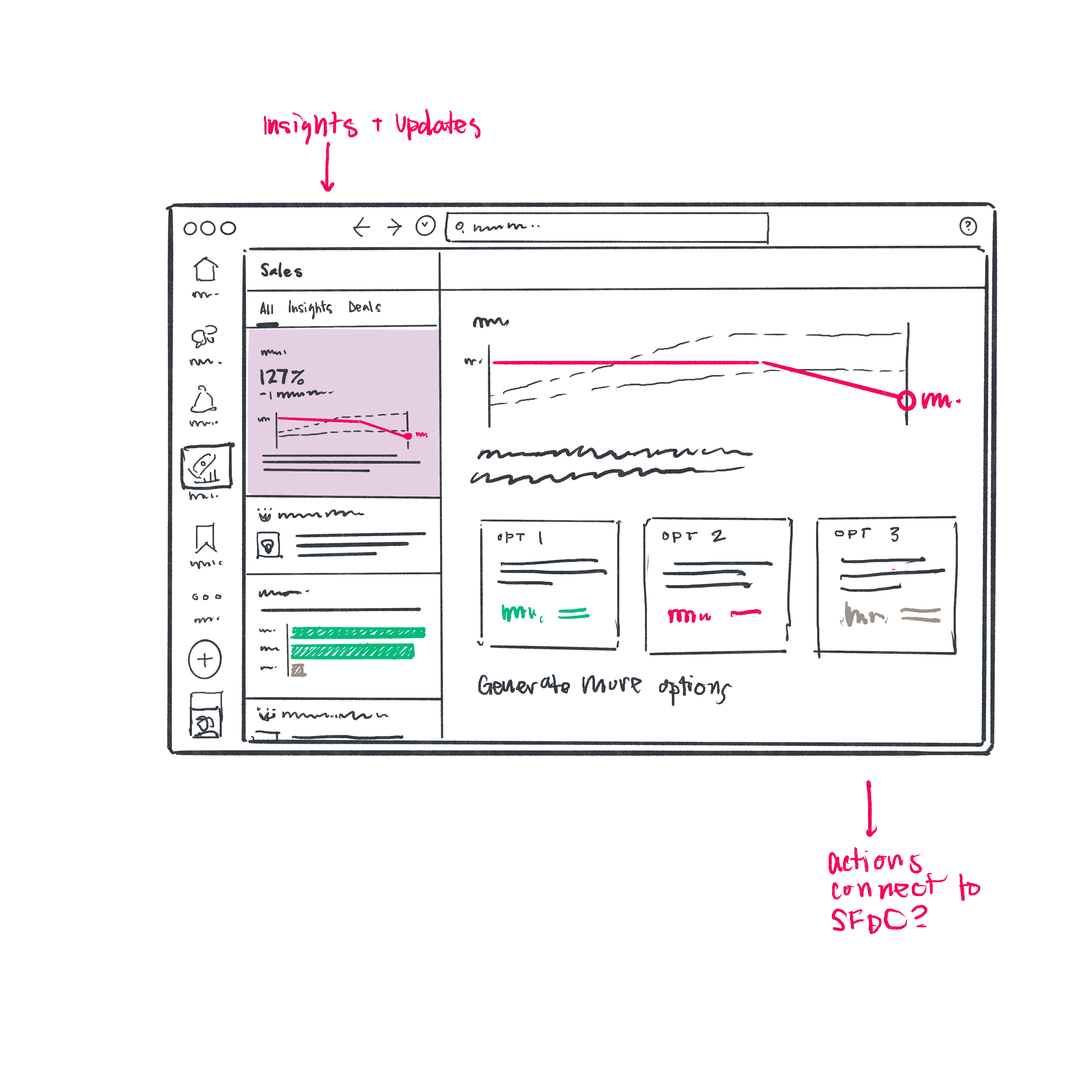
The first artifact wasn’t a wireframe — it was a storyboard, a sales rep’s morning drawn by hand. Hand-drawn drafts signal an idea still open for shaping; high-fidelity mockups look settled too early. The storyboards became an interactive demo at a company-wide event. That demo did the work I’d hoped sketches would do — gave executives something to react to, not just nod at. We left the room with a green light to build.
The structural decision
The hardest call wasn’t what to build, but where to put it. Sales Cloud’s surface is dense, configurable, modal. Slack’s is conversational, channel-based, additive. I considered three placements:
- A Salesforce-branded app inside Slack. High fidelity, but it read as a port of Salesforce — which defeated the point.
- A new “Sales” tab. Clean, but it siloed sales work from the conversations it referenced.
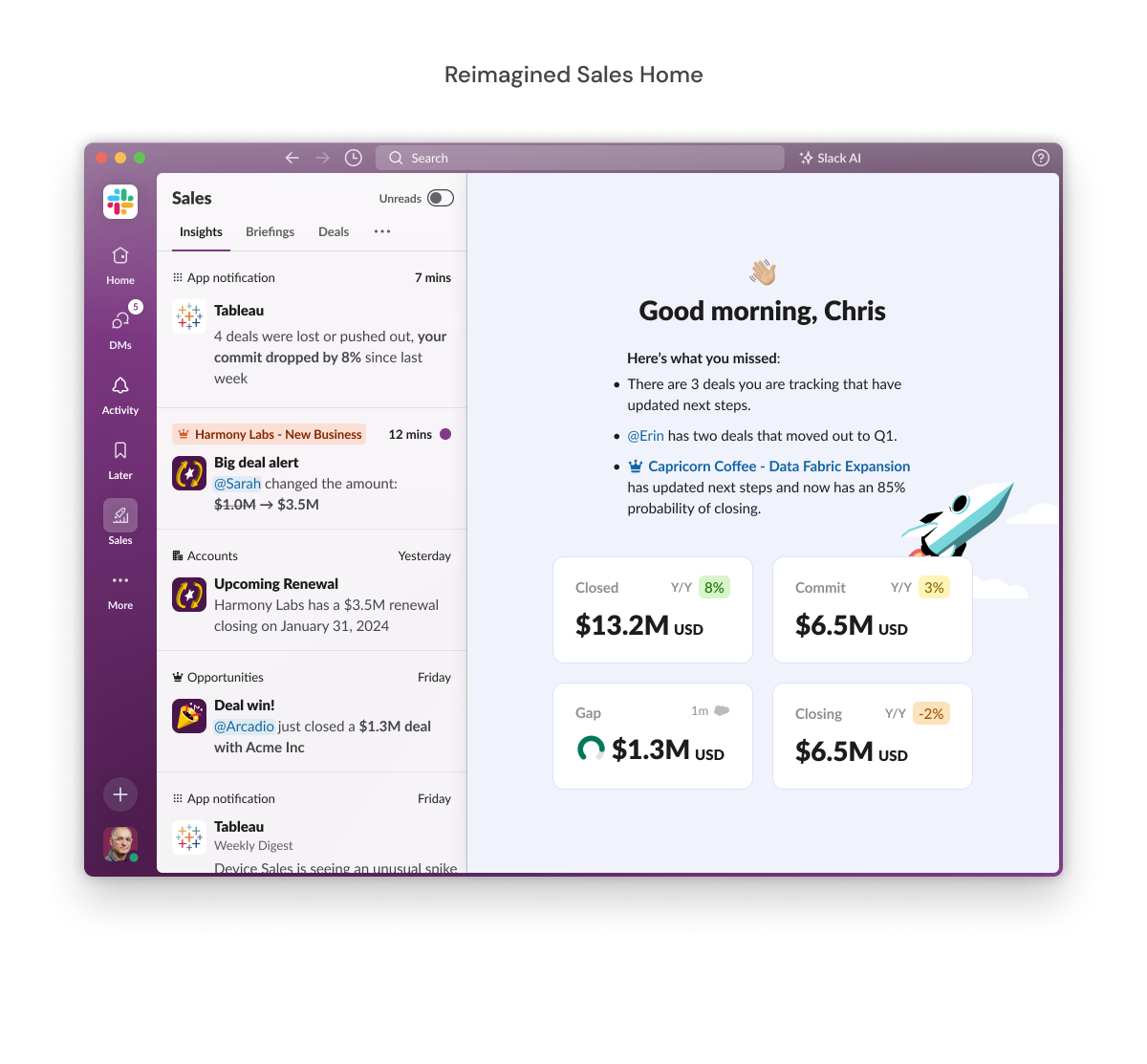
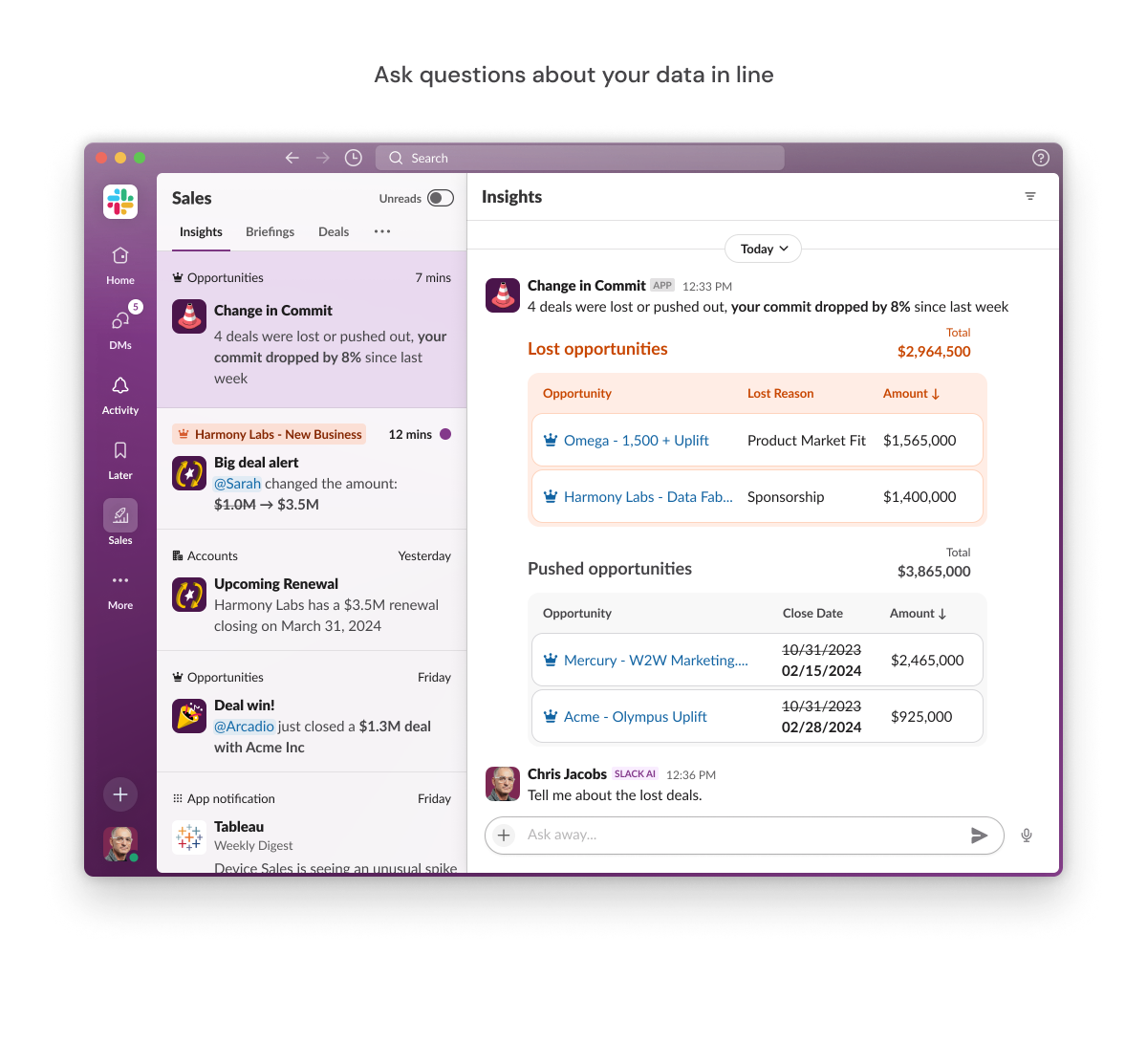
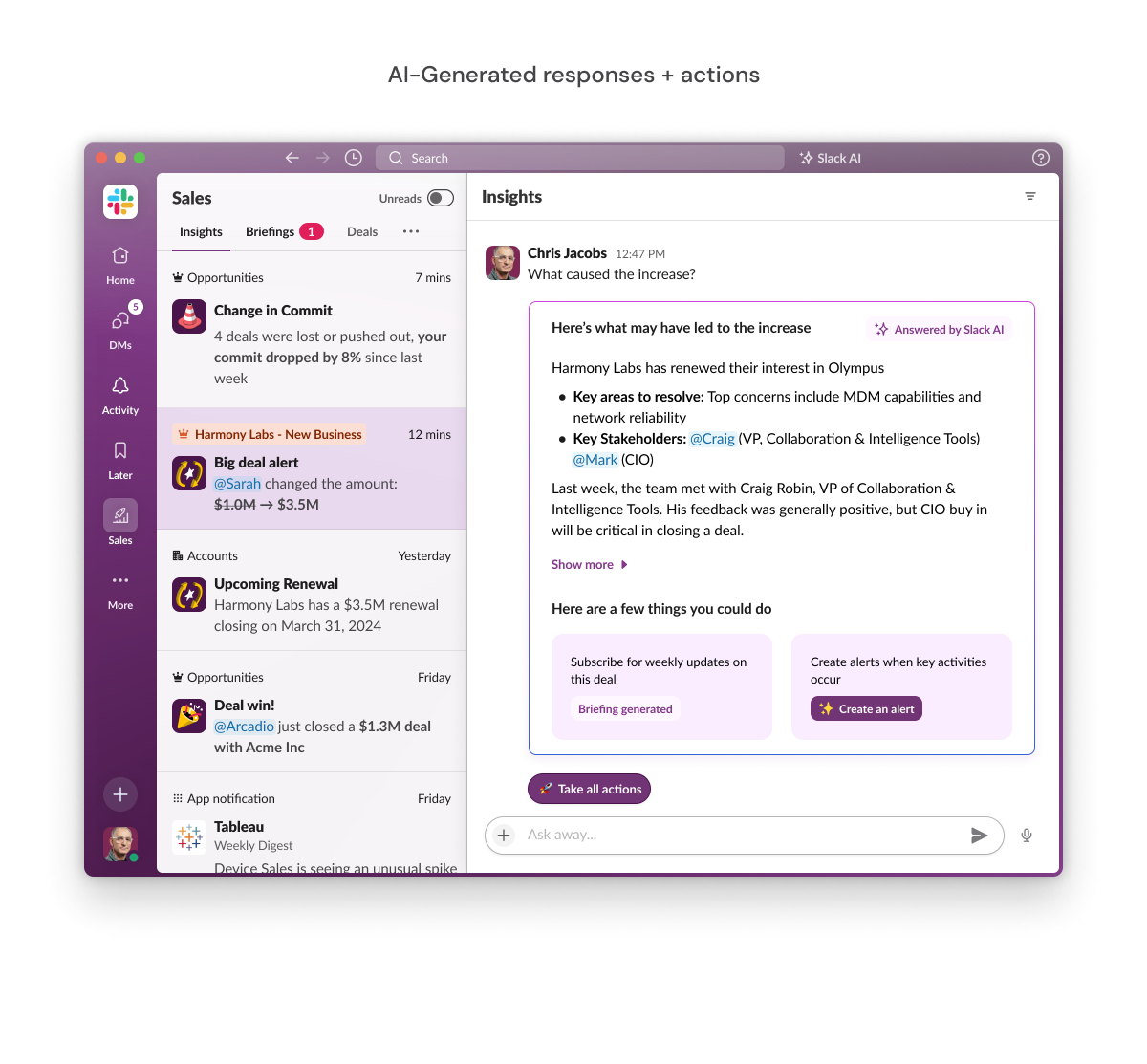
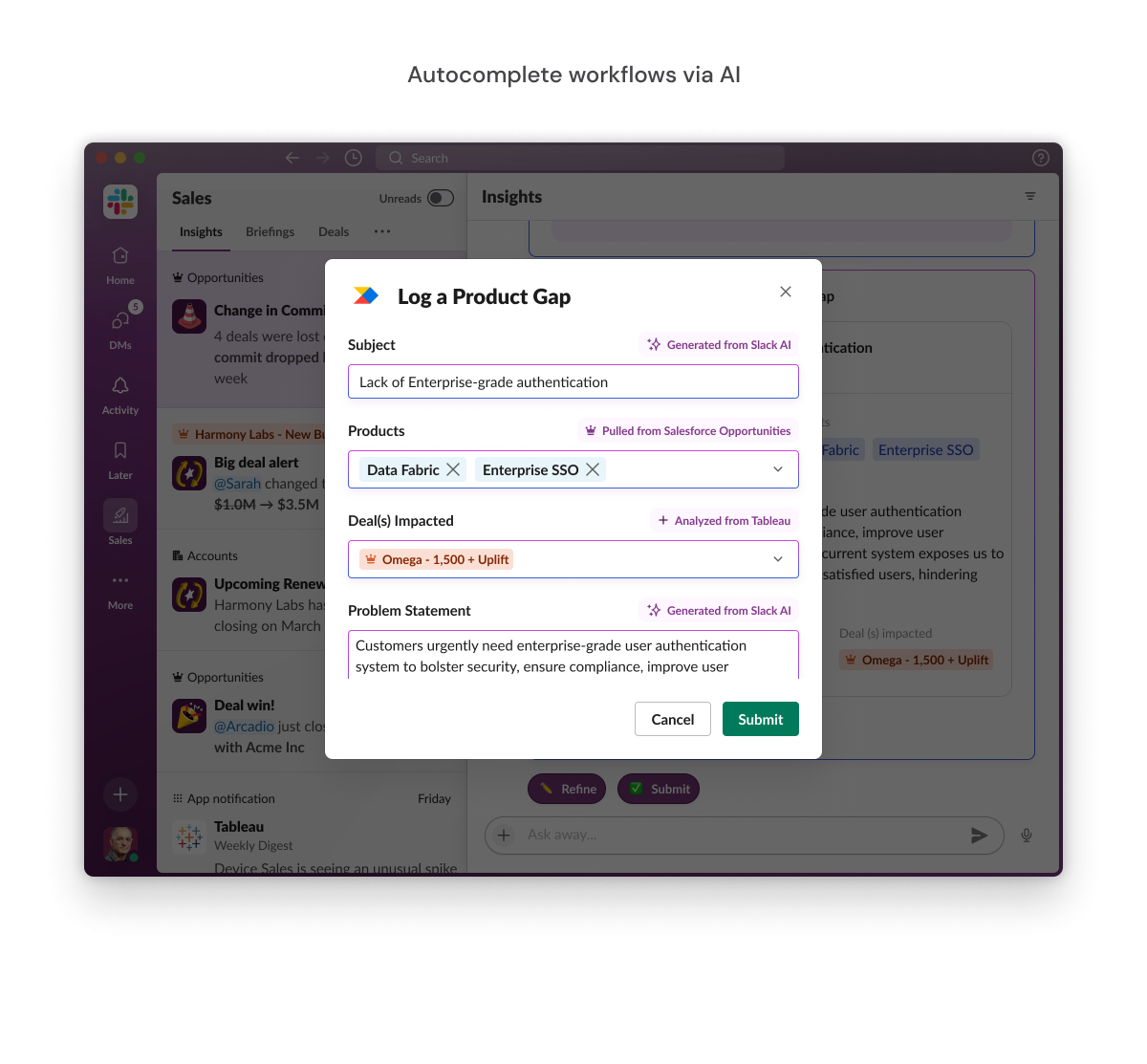
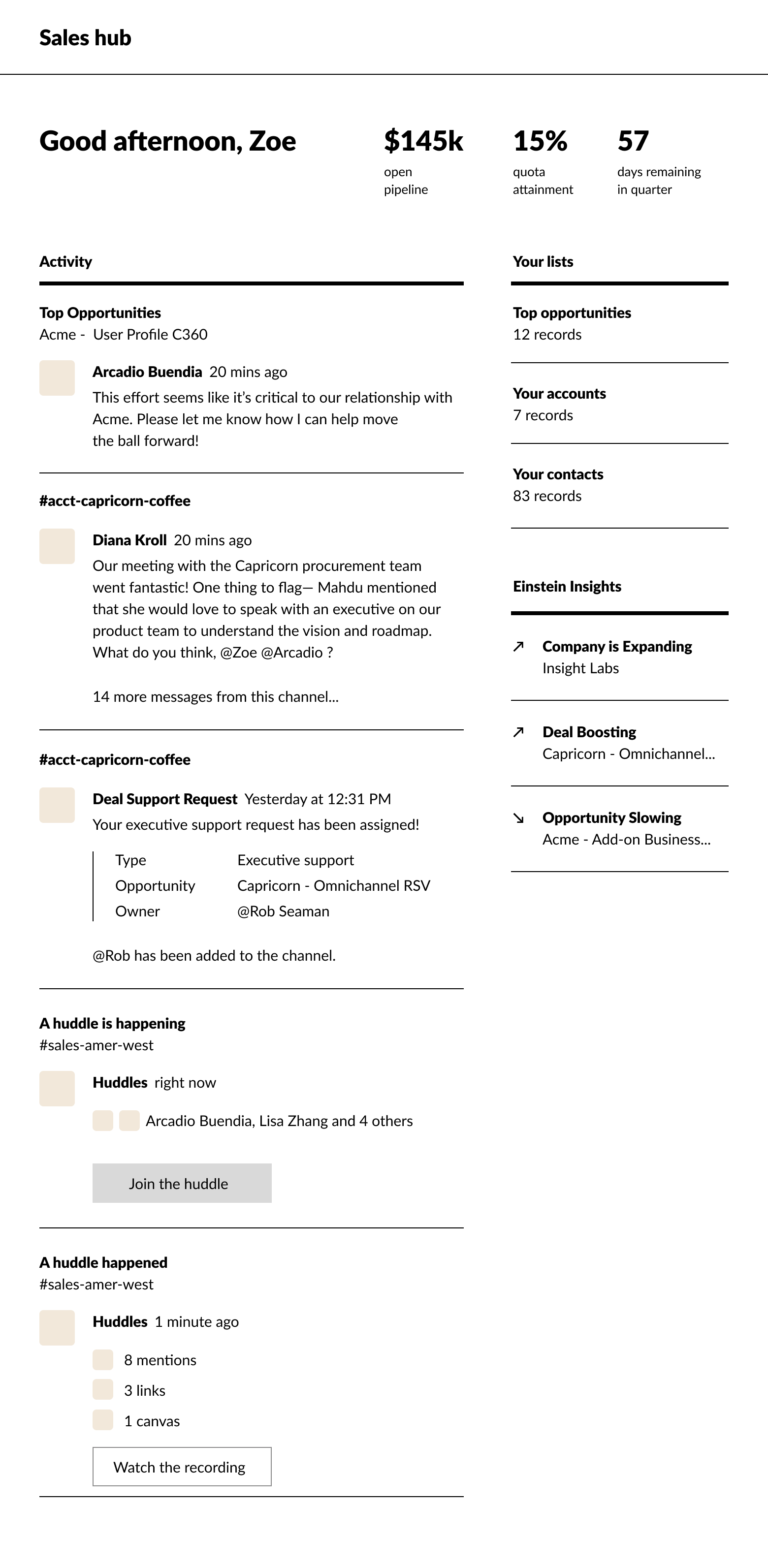
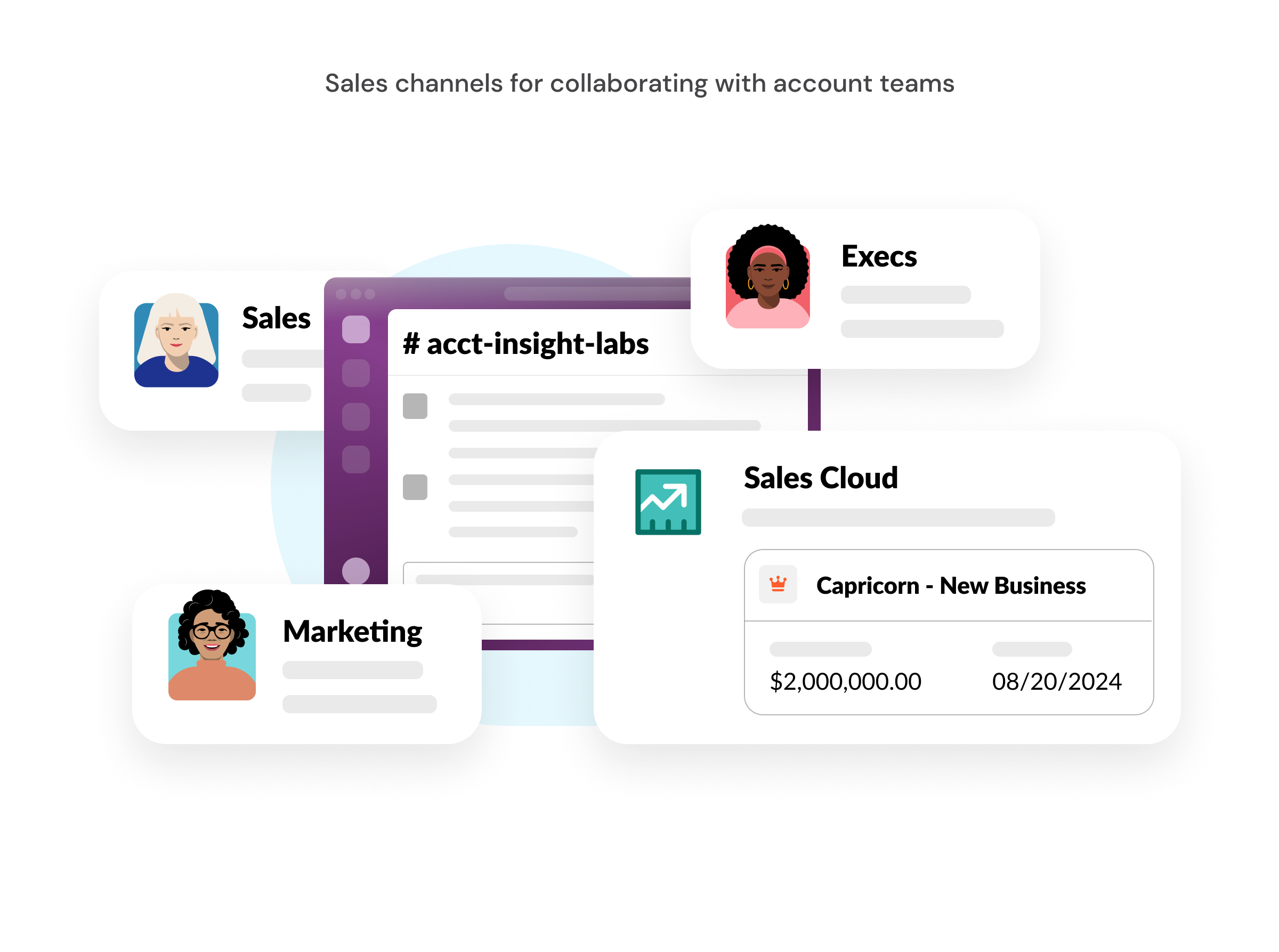
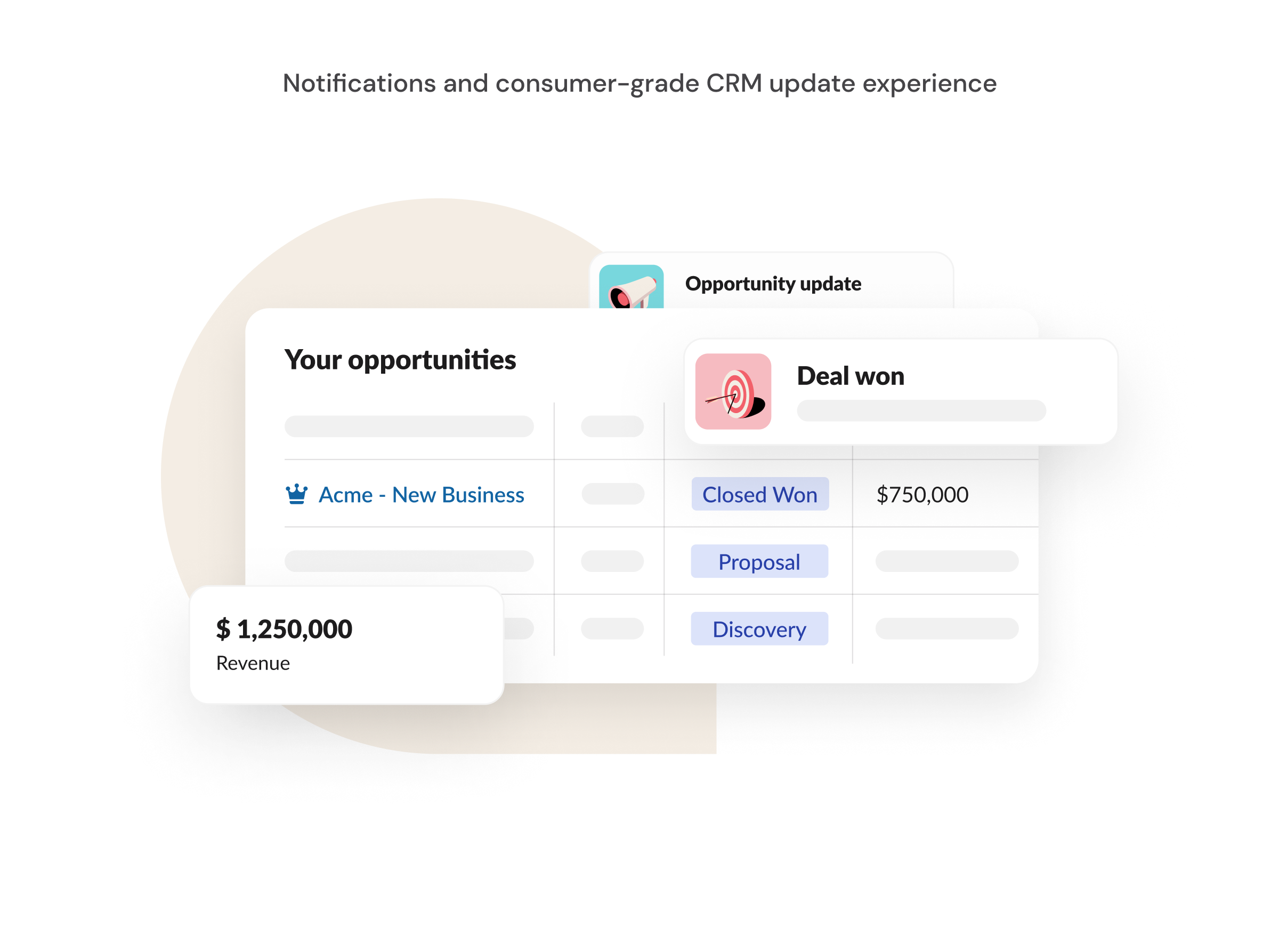
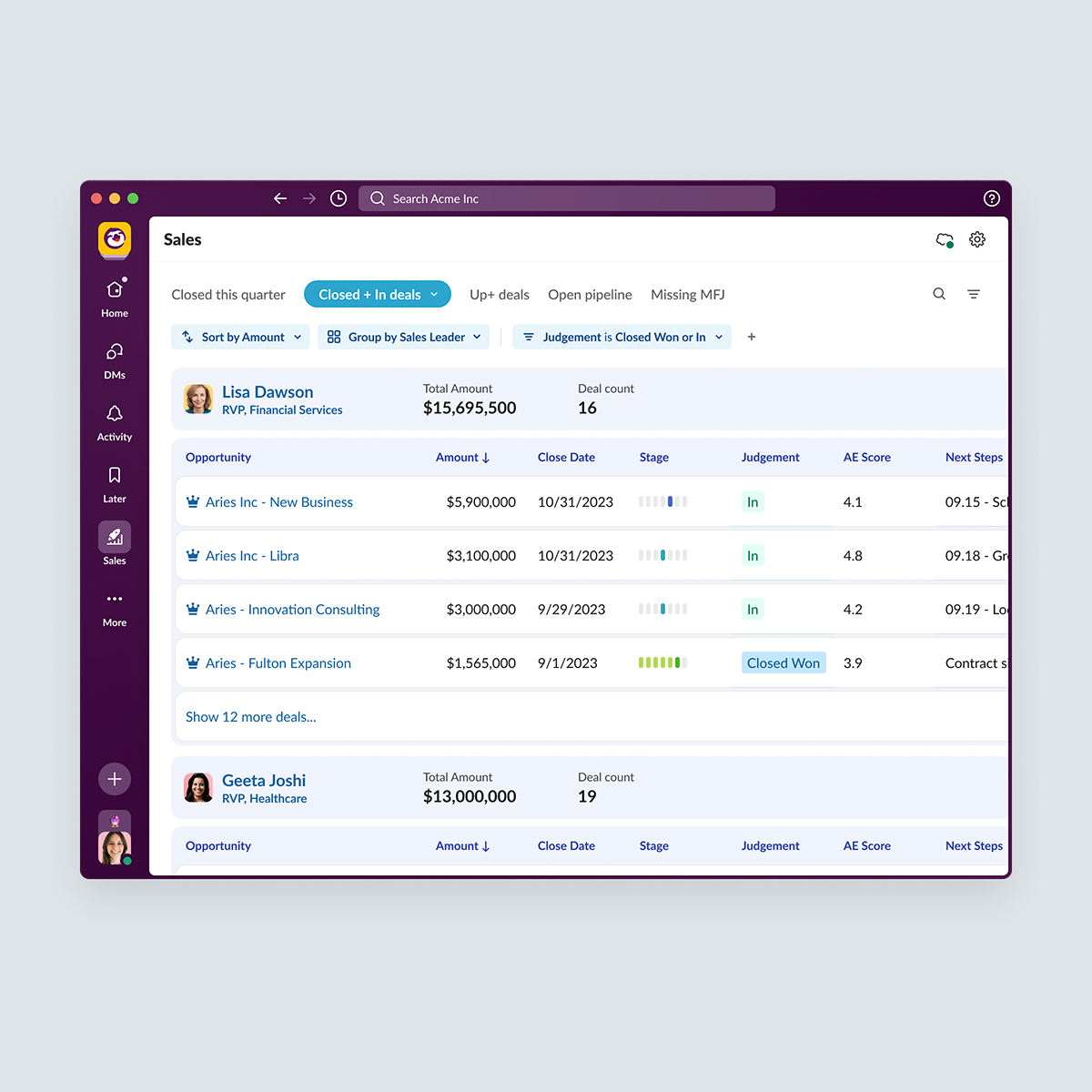
- A “Sales Home” surface plus deal channels and inline actions. Slack-native primitives, loaded with Salesforce data and behavior.
The third won. A salesperson’s day is structured around deals and calendar — both already had natural homes in Slack. We didn’t need to invent new concepts; we needed to load the existing ones with the right data. The build went to a small senior team with end-to-end ownership — a structural choice as consequential as any visual one.
What shipped
Outcomes
Two years on the market, sellers describe the experience the same way: “I never want to open Salesforce again.”
What came next
The strongest signal that the structural bet was right was what followed. Salesforce record channels for opportunities, accounts, and contacts — generalizing the channel-as-record pattern Elevate had proved. Two years on, that bet is the foundation of how Slack carries CRM data, not a feature inside it.
Reflection
I underestimated how much the demo would do. I’d thought of it as a way to communicate the design; it turned out to be the moment that aligned a cross-functional org around a shape. A design demo isn’t a usability artifact — it’s a strategic instrument. Next time I’d start with it as the deliverable, not the deck.
The other lesson was about the first attempt. The best-practices library was a teaching product when sellers needed a time-saving one. The redirect cost weeks but produced a sharper question. That kind of midway pivot is the part of design work nobody puts in a portfolio — and it’s where the real thinking happens.
Looking ahead
Many Elevate features are now folded into the broader Slack CRM offering. The current direction surfaces AI agents inside the workflow and stretches the Slack-as-workspace pattern into marketing, HR, and customer service.